
Use Case: Protecting Batteries at an Exposed Railway or Telecoms Location
A use case for a battery installation exposed to unauthorised access, weather, corrosion and infrequent supervision.
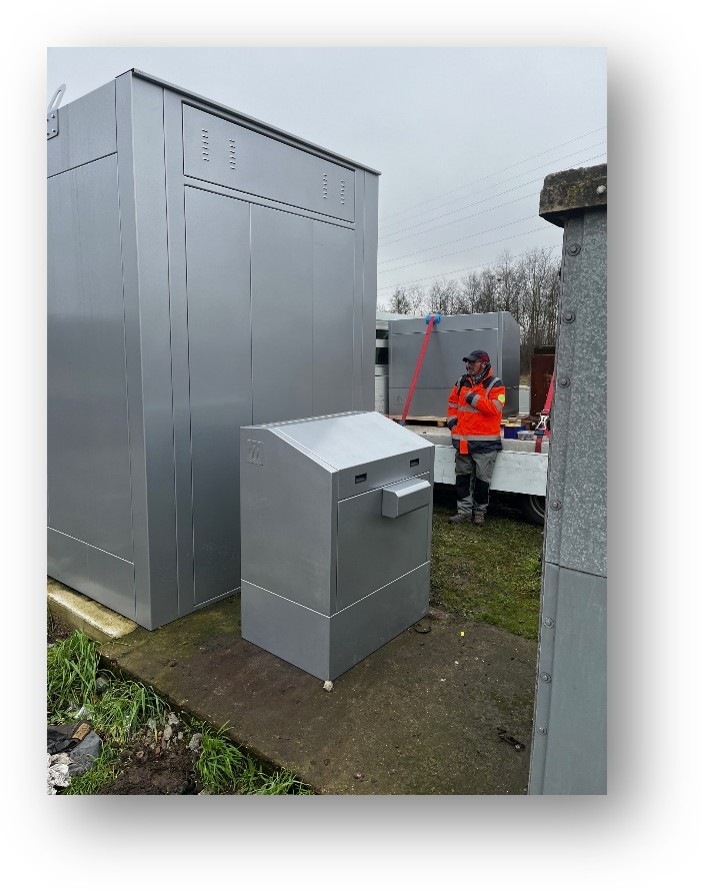
This is an illustrative engineering use case based on documented ALIAS product capabilities. It is not a named customer project, a site-specific design or a performance guarantee.
Site profile
A battery installation is located away from a continuously staffed facility. The site may be beside a railway, at a telecoms location or within an isolated automation or energy asset. Unauthorised access, deliberate damage and environmental exposure are all part of the risk profile.
The shelter must protect the batteries while allowing authorised teams to inspect, maintain and replace them.
Risk assessment
- Likelihood and likely method of unauthorised entry.
- Distance from routine supervision and emergency response.
- Exposure to salt, pollution, standing water or vegetation.
- Battery hazards, ventilation needs and electrical isolation requirements.
- Access for maintenance vehicles and lifting equipment.
- Condition and suitability of the existing slab.
- Interfaces with fences, gates, cable routes and adjacent equipment.
Protective features
SafeBox AVAC uses reinforced welded construction and four-point locking with 25 mm hardened steel bars. Hidden hinges and no externally accessible fixings are intended to reduce exposed attack points.
C5M corrosion protection supports use in aggressive outdoor environments, while the secure enclosure must still be inspected and maintained according to the actual exposure.
Battery-specific features
Full frontal access supports inspection and battery replacement. An integrated retention tray provides a defined environmental-control feature within the shelter.
The final internal arrangement must preserve safe cable routing, ventilation, clearances and access to the retention area.
Installation planning
A typical SafeBox AVAC installation is approximately two hours, subject to site and operational conditions. Remote access, lifting, battery handling, isolation, testing and handover may make the complete project window longer.
Where the existing concrete slab is to be reused or enlarged, the proposal should be checked and approved before installation.
Ongoing asset management
A remote shelter should have a defined inspection frequency based on the threat and environment. Records should capture attempted entry, coating damage, corrosion, lock operation, door alignment, leaks, tray condition and changes to the surrounding site.
After any external device or cable modification, the enclosure interfaces should be rechecked.
Use-case conclusion
SafeBox AVAC provides a combined security, maintenance and retention platform for exposed battery installations. It is particularly relevant where the asset must remain serviceable but is not under constant supervision.
The solution should be specified against the actual site threat, battery system and environmental conditions rather than described as absolutely vandal-proof or weatherproof.
ALIAS Engineering
We design and install modular enclosures for signalling, telecom and energy assets across European rail networks. Field notes from our installation teams are published here as they are cleared.